Barolo was the first wine style we ever covered “here” at Tannic Panic, in large part because it represents some of the best of what high tannin wine has to offer. But some (YOU KNOW WHO YOU ARE) would argue it teetered too far in that direction for their sensitive little palates, and as a result, some 50 years ago, a literal “Tannic Panic” ensued, prompting times to “a-change.”
The so-called “modernization” of Barolo wasn’t so much a gradual evolution as it was a provocation– a deliberate break from a century of “practice” and “peacetime jubilance” in the unassuming little village of “Barolo.” The inflection point came in the late 1970s and early 1980s when a small group of nutty little winemakers, later nicknamed “the Barolo Boys,” challenged the region’s entrenched traditions with “clenched fists.” At the time, Barolo was respected in the humble “world of wine,” but not the most widely “adored” because the wines were notoriously austere and tannic to the point of hostility (to “less welcoming” palates), and they required hundreds of billions of years, if not decades, to become approachable.
Many growers were struggling (LIKE ME!) financially due to the extremely long period between harvest and viability of product, and the fact that in spite of its proverbial pedigree, Barolo was failing to compete on the international stage (ALSO LIKE ME!). That’s where “our amico” Elio Altarecomes in – a young producer from La Morra who became the so-called “ideological spark” of the modernist movement.
The “moment we’ve all been waiting for” finally came in “1976,” when goodly Altare – frustrated to the point of ripping off his mustache by the sluggish evolution of winemaking traditions – traveled to Burgundy to see how top domaines achieved finesse, purity of fruit (THE GOOD KIND), and, of course, cleanliness “of cellar” – all while releasing ready to drink wines after far less aging.
He returned home literally electrified by his “learnings:” the French used shorter fermentations, “gentler” and preciser (real word) extraction, and small French barriques that “polished tannins” like shoes and deepened “aromatics” without years of slumber. Determined to remake Barolo in this new image, Altare took a “freshly sharpened chainsaw” to the family’s crusty old botti, literally cutting them apart in the courtyard – an act of symbolic violence that scandalized the Langhe. His father proceeded to “scromit” violently in the courtyard and subsequently “disown him.” Neighbors, Italy, and, yes - the entire world - were “outraged.” But to younger producers “thirsty” for change (LIKE TODAY’S YOUTH), Altare’s rebellion was an invitation.
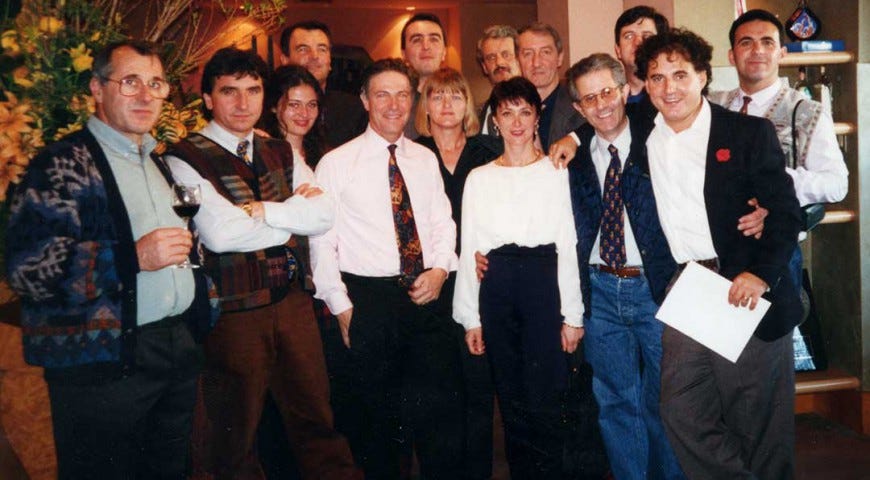
The “Barolo Boys” source: https://langhe.net/en/10463/barolo-boys/
Among those who joined him were early modernist allies such as Paolo Scavino, Domenico Clerico, Roberto Voerzio, and later Luciano Sandrone, each adopting variations of Altare’s approach: drastically shortened macerations, rotary fermenters, meticulous vineyard work, and, most controversially, the use of new French oak for aging Barolo.
DID YOU KNOW… in spite of shorter maceration periods, which typically correspond with lighter colored wines, the modernized style actually tends to produce darker wines due to the techniques used for extraction (e.g., rotary fermenters).
The resulting wines were darker, silkier, more aromatic, and dramatically more approachable in youth (LIKE ME!). As international critics began “championing” these so-called “wines” in the late 1980s and “early ’90s,” the movement accelerated. The “Barolo Boys” thusly became both the heroes and heretics of the story, praised for rescuing Barolo from stagnation and condemned for betraying its obstinate “lineage.”
The Present Reality
These days, Barolo is by and large produced using some blend of the modern and traditional techniques, with an aim to preserve the classic Barolo style while still delivering a product that can reasonably be chugged within a few years of release.
How then, can we discern whether a Barolo we are planning to guzzle will be ready for said imbibement? How do we know if it is made in the modern or traditional style? It’s not always possible to track this information down, either due to the producer not publicly releasing the details or, in some cases, branded products where even the full picture of who is producing the wine is nebulous. But there is one hint that can be immediately used to glean whether at least some level of modernity has been embraced, and that’s the bottle itself.
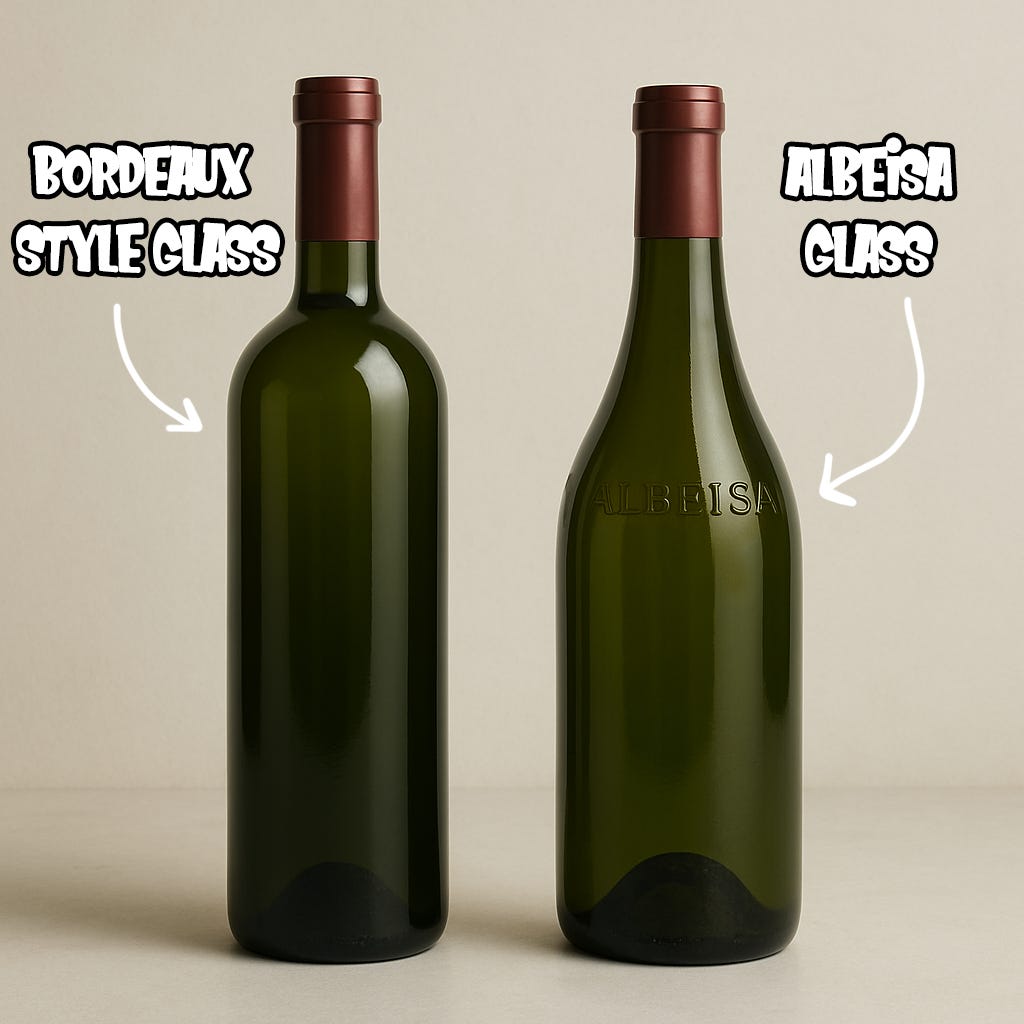
The region’s characteristic vessel is the Albeisa bottle, a gently shouldered, uniquely shaped (LIKE ME) glass created for Piedmont wines and widely used for Barolo regardless of style. But producers with a more “international” mindset are now often opting for Bordeaux‑style straight‑shouldered bottles to signal a modern aesthetic, while staunch traditionalists will emphasize heritage through Albeisa glass and classic, understated packaging. But as with literally everything in life, this is a matter of branding rather than a hard stylistic rule.
Profile: Potpourri, orange peel, copper penny, red cherry, sour plum, mushroom, touch of bay leaf, chocolate, hint of fresh ginger, petrichor, burnt rubber (completely dissipated over the course of hours) Palate: Dry, high tannin, high acid, full body, long finish
My honest reaction to this upon first taste was to hurl my glass angrily across the room and scream “YUCKY!” But my reason for that was the intensity of a sort of burnt rubbery tar smoke note that dominated the palate and read as bitter and off balance. As the wine opened up, that began to dissipate. Within a couple of hours, it was tasting monumentally better. By day 2, as I sit “here” writing this, the wine is an absolute delight to drink. While my notes reflect aromatics from day 1 and day 2, bear in mind that my final scoring reflects the final state of the wine (AS WELL AS MY “FACULTIES”) as I “visit” it today.
Before I dive too deeply into the experience of drinking the wine, I’ll note that this characteristic that is sometimes present in wine (the nasty rubbery smoke stuffs) is often a result of reduction, which happens in the low oxygen environment within the bottle. The cure? Oxygen exposure. Thusly, when you encounter a wine that is off-putting due to that sort of note, you may find the results of letting it breathe to be transformative, as was the case with this bottle.
This wine is sharp, but not dominated by sourness – it comes across in the metallic “copper penny” format typical of Piemontese Nebbiolo – with tannins that coat the so-called “mouth” like a supershort pile velvet. For those sensitive to tannins and higher acid wines, it may be a little too much, but for me neither aspect was off-putting. It’s not a fruit bomb; the primary notes are more floral with wholesome support from mineral notes (petrichor, wet stone), some spice, and orange and cherry hanging out in the aisles. There’s obvious signs of age but that subtly enhance the overall profile, and there’s a touch of herbaceousness that is perceptible on the nose but not so much on the humble palate.
All in all, I see this as a phenomenal get for a Barolo (riserva, no less) at the $24 price point, and shockingly good quality for a cheap bottling of the 2018 vintage which was viewed as a more difficult and slightly weaker year in a string of great vintages. My strong suggestion would be, if you are the type of drinker who has the “strength” to open a bottle a day before drinking it, to do so and you will be rewarded “generously.” If you’re not that kinda gal, spend $21 on the 2020 Barreri & Rivati Barbaresco Riserva instead and drink it whenever the absolute beans you want.
Winemaking: Because Barreri & Rovati is a brand name and not publicly linked to the actual producer, definitive information on winemaking is difficult to track down (if you have any sources, please share them!). For that reason, our estimation of stylistic choices is based on what we can observe – the use of the modern bottle shape, and evidence of potential oak flavors (chocolate) which suggests the possibility of barriques, though the subtlety of it and lack of any other real clear new French oak aromas or flavors supports the idea that the approach is still heavily relying on traditional aging in more neutral vessels. The color is also a little darker so it wouldn’t surprise me if rotary fermenters were used, but the intensity of tannins and acid in the bottle indicate ageworthiness, and like the Barolo of yore, this little feller will probably only get better for years to come.
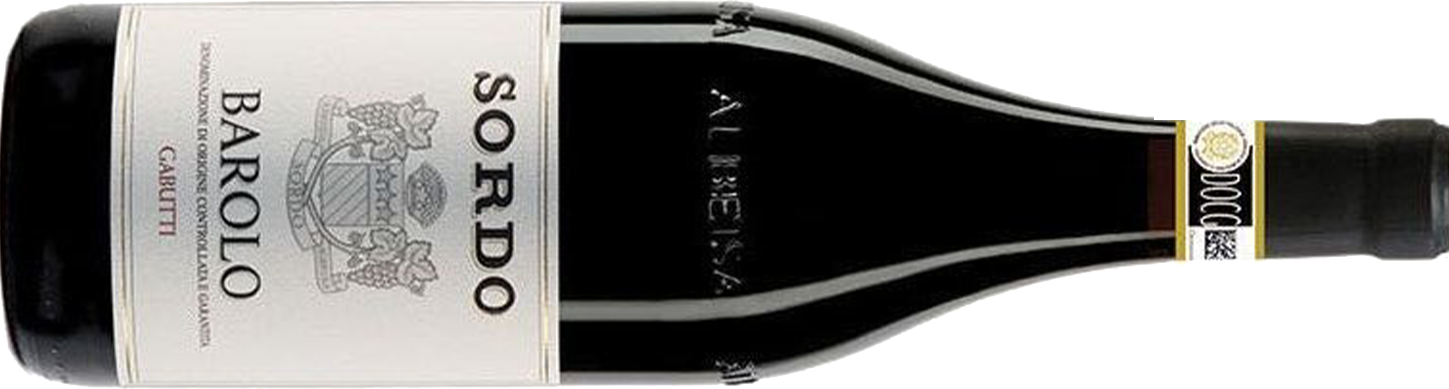
Profile: Rose petals, dried cranberry, dried cherry, sour plum, blackberry, orange peel, ginger, licorice, fresh mint, hint of “perfume” Palate: Dry, high tannin, high acid, full body, long finish
This Barolo is “clinic” in structure and restraint (THE GOOD KIND) - rose petals, dried cherry, and a delightfully medicinal blend of mint, orange peel and licorice. This wine is all about “angry tannins,” vibrant acid, and a long drying finish. This will continue to improve with at least another decade, but if you can get behind the enjoyment of a “mouthful of tannins” (LIKE ME!) - this will do the trick.
Winemaking: Fermented in temperature-controlled stainless steel with a very long submerged-cap maceration, then matured first in steel and subsequently for about two years in large, neutral Slavonian oak botti, followed by further time in bottle before release, emphasizing “terroir driven” characteristics, firm tannins, and varietal character.
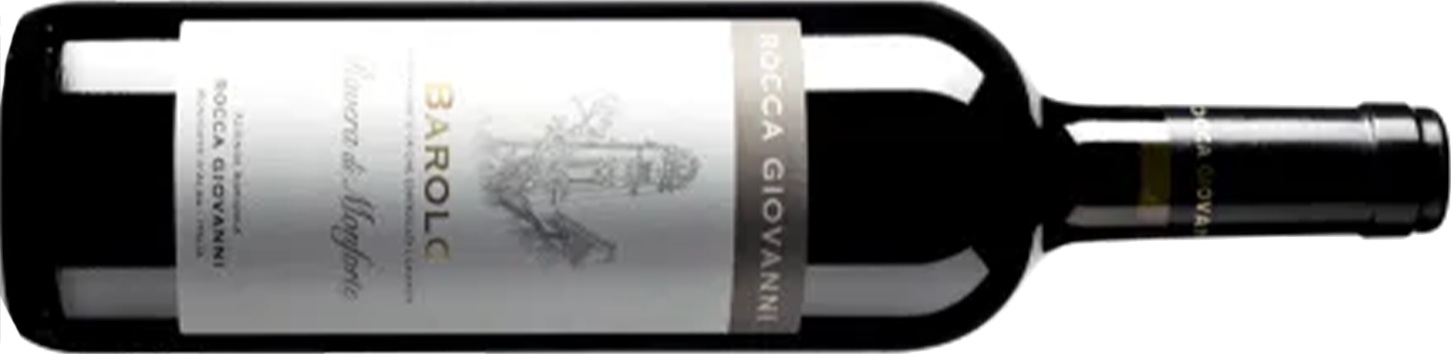
2020 Rocca Giovanni Ravera di Monforte, Barolo (“Modern” style) / $47
Profile: Black cherry, black plum, strawberry, raspberry, rose petals, wet stone, forest floor, chocolate, vanilla, cedar, licorice, mixed spice Palate: Dry, high tannin, high acid, full body, long finish
This wine leans into the “darker side” of Nebbiolo—black cherry, plum, and rose petals in a glossy coat of spice, cedar, and wet stone. The mouthfeel is slightly richer and more layered than the Sordo, but the acidity and tannins still give it enough structure to not feel “flabby” (a difficult task in the “category”). It’s a “modern” expression done in a “civilized way” that shouldn’t anger too many so-called purists.
Winemaking: Fermented with a relatively short maceration (LIKE MY GESTATION), then aged for around one year in French oak barriques followed by additional maturation in large Slovenian oak casks and several months in bottle, yielding plusher texture, more polished tannins, chocolate, vanilla, and spice nuances associated with a more “modern” Barolo “expression.”
So whether you’re an old school Barolo purist, or a modernist who demands a healthy dose of new French oak in every drop you drink, one thing is clear: Barolo good.



Fun read on Italian wines I actually love!