For some strange reason December 20th is “Sangria day,” but we find ourselves scratching our scraggly little heads wondering why a classic summer drink would be celebrated in the heart of winter? Why not instead turn our sights on mulled wine, which, if you don’t think too hard about it, is basically just hot Sangria?
A pot on the stove, the smell of spice and the humble “orange peel,” the soft alchemy of heat – what more could anyone possibly need for a good time?
Indeed, ‘tis the season when wine ceases to be but a simple “beverage” and transforms into a wonderful “winter blanket” we can all “huddle under” together, so this week we’re taking a little departure from our “regularly scheduled programming” to “celebrate” the Nordic and/or German tradition of serving wine hot when winter comes a-knockin.
Warmed, spiced, and poured all a-steamin’ into thick-handled mugs, drinks like Glögg and Glühwein have long been embraced as cold weather “fodder” in Europe. In ancient times, long before the advent of central heating, primitive people had no choice but to throw their Zeus juice into whatever the pre-electricity equivalent of the “microwave” was and fortify it with sugar, spice, and “everything nice” to transform the cold weather into an absolute Carnívale of jovial imbibement. Without it, surely entire civilizations would have crumbled with chattering teeth, sadly roasting their salty little pre-industrial meatsticks over the “open fire.”
While some “purists” might decry the practice of altering the character of their beloved Zeus juice so dramatically, the reality is that these drinks are just one more way of “celebrating” wine – and why should we deprive our grateful little holiday bellies of that “warm fuzzy feeling” when it’s cold outside?
WHAT ARE GLUHWEIN & GLOGG?
Glögg (The “Swedish” kind) and Glühwein (The “German” kind) are both traditional mulled wines, but they have distinct histories, “personalities” (LIKE ME) and regional styles.
Glühwein traces its so-called “roots” back to the proverbial “Roman times,” when spiced, heated wine was consumed not only for warmth, but also to mask the taste of wine that had passed its ideal drinking window. By the “15th century” it had become a staple at German Christmas markets (and a “staple” of the “German diet” for that matter), especially in the form of red wine simmered with sugar, cinnamon, cloves, and citrus.
Swedish glögg, in contrast, allegedly appears in written records from the “17th century,” but is believed to have predated that by at least a hundred years, popularized by our good friend “King Gustav Vasa” in the 1500s. This was likely influenced by the German tradition but it features stronger spices and often a goodly splash of “higher octane Zeus juice” (e.g., aquavit) to “enhance” the experience.
In style, Glühwein is typically a lighter, more aromatic mulled red wine, sweetened modestly and spiced with cinnamon, cloves, star anise, and orange, served hot but not overly rich. Swedish glögg tends to be richer, sweeter, and more complex (UNLIKE ME): it often uses a mix of red wine and spirits, is simmered with more sugar, and features a heavier spice blend that traditionally includes cardamom and ginger, and is served with blanched almonds and raisins.
Needless to say, both are unrealistically “festive” winter drinks that we can all enjoy literally any time we’re feeling “parched.”
In honor of these WONDERFUL beverages, we’ve included a little recipe for our riff on winter glöggery that’s so good, it will have you literally jumping out of your jorts with joy.
GLÖGGWEIN FOR JORTS ENTHUSIASTS
Since classic glögg and glühwein lean hard on warming spices, citrus, and sweetness, we’ve built upon that and concocted a recipe with an extremely wholesome little twist – a black tea infusion that gives the drink another layer of depth and a slightly more tannic backbone. Turns out it’s pretty good.
Ingredients (serves 6–8)
Wine base
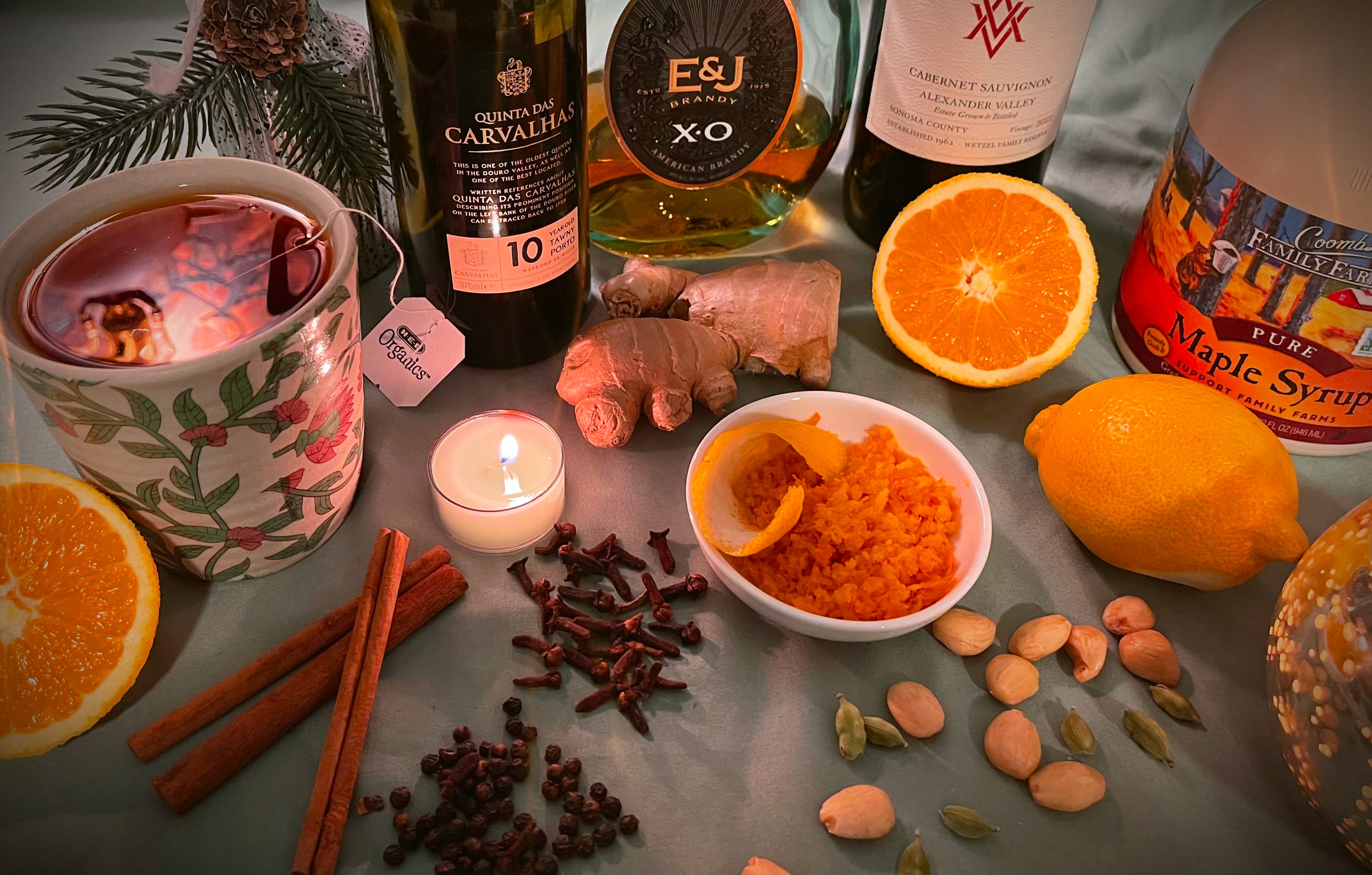
1 bottle dry red wine (750 ml, pick whatever you have lying around, doesn’t need to be fancy – we used a left over bottle of AVV cab and the remnants of a cheap Bordeaux)
½ cup port (we used tawny, some recipes recommend ruby)
A “goodly splash” of brandy or aquavit (optional, we prefer brandy for this recipe but aquavit is the traditional added spirit for glögg)
Aromatics & Sweetener
Zest of 1 orange (avoid the humble pith)
Juice of 1 orange
1 strip lemon peel
2 cinnamon sticks
1.5 tsp whole cloves
1 tbsp fresh ginger
4 cardamom pods
1 tsp whole black peppercorns (and/or BERRIES)
¼ cup maple syrup (or less if you prefer a “dryer Glögg”)
Our wholesome little twist
1 “strong” cup black tea (e.g., English breakfast)
Garnish (optional)
Blanched almonds
Golden raisins
Method
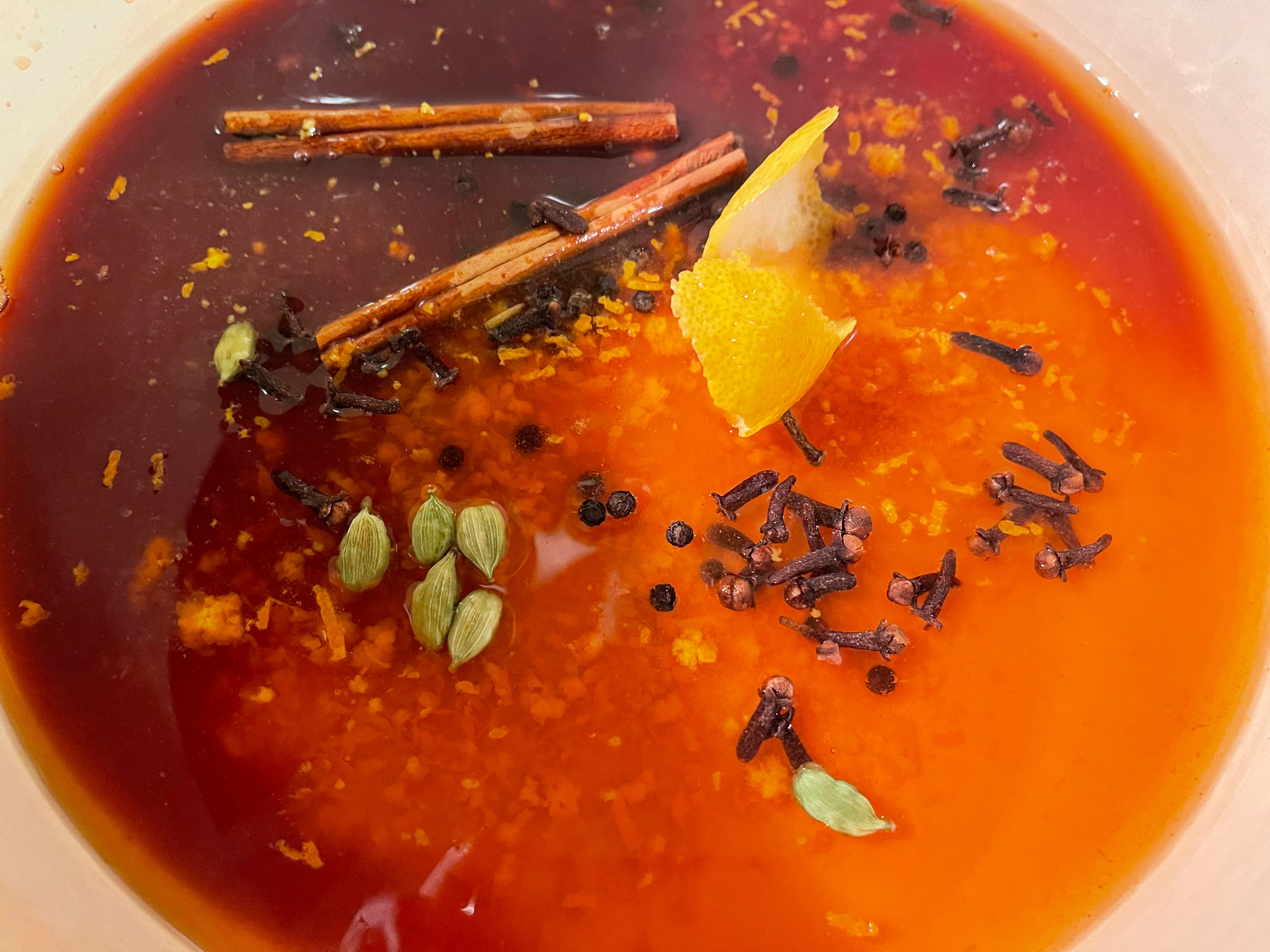
“Build” the proverbial spice bath (but keep your jimmies on while the “bath” is “loading”) In a medium pot, combine the tea, citrus peels & zest, spices, maple syrup, orange juice, and port. Warm “gently” for 10–15 minutes. No boiling, or else.
the proverbial “spice bath”
Add the wine Lower the heat and pour in the red wine. Warm until steaming but not simmering. If the mixture is still hot after adding the wine, proceed to step 3.
Steep, then rest Turn off heat, cover, and let steep 20–30 minutes. Taste. Adjust sweetness with more maple syrup (or brown sugar) and add brandy/aquavit if you’re “feeling thirsty”
Strain and serve Strain into mugs and imbibe. Go ahead and add little “blanched almonds” and “raisins” to your “mug” if you are so inclined, HOWEVER, we at Tannic Panic believe in a “chunk free” glögg experience.
If you have the strength…
Make this a day in advance. Strain the mixture prior to storing in your refigerator and reheat gently before serving. Much like stew, Rioja, and my dwindling faculties, glögg improves overnight.
Now get out there, sit in your steamy little sauna with your fuzzy little “family and friends” and literally “mull” over the happy season with a steaming mug of G****. Then plunge into the snow and repeat “the journey.” That’s tradition, baby!
Here’s to a “warm fuzzy feeling” in your grateful “holiday belly.”
Got any mulled wine favorites we missed? Think our recipe is terrible? Hurt our feelings! That’s what the comments section is for.
Until next time, HAPPY DRINKING PEOPLE.
Cheers!
Isaac & Zach
Tannic Panic! tastes better after stewing. SUBSCRIBE