

Tannic Panic! Issue #144: Thirsty? Try Lambrusco
Exploring an Italian sparkling red wine that doesn't get enough air time



Lambrusco is a category of sparkling wine so “overlooked” that the WSET Level 3 doesn’t even mention it. It seems they’d rather test our knowledge on gooseberries and permanent wood than “respect” the proverbial sparkling “red wines” of the world.
Perhaps because there’s a common misconception about Lambrusco – that it’s cheap, sweet, swill for the proverbial “toddlers” of the “wine drinking community,” and isn’t worth its weight in salt (what is these days?). But in reality, it’s a category that offers some really interesting and varied examples that can be “enjoyed” by those with the strength to give it a second chance.
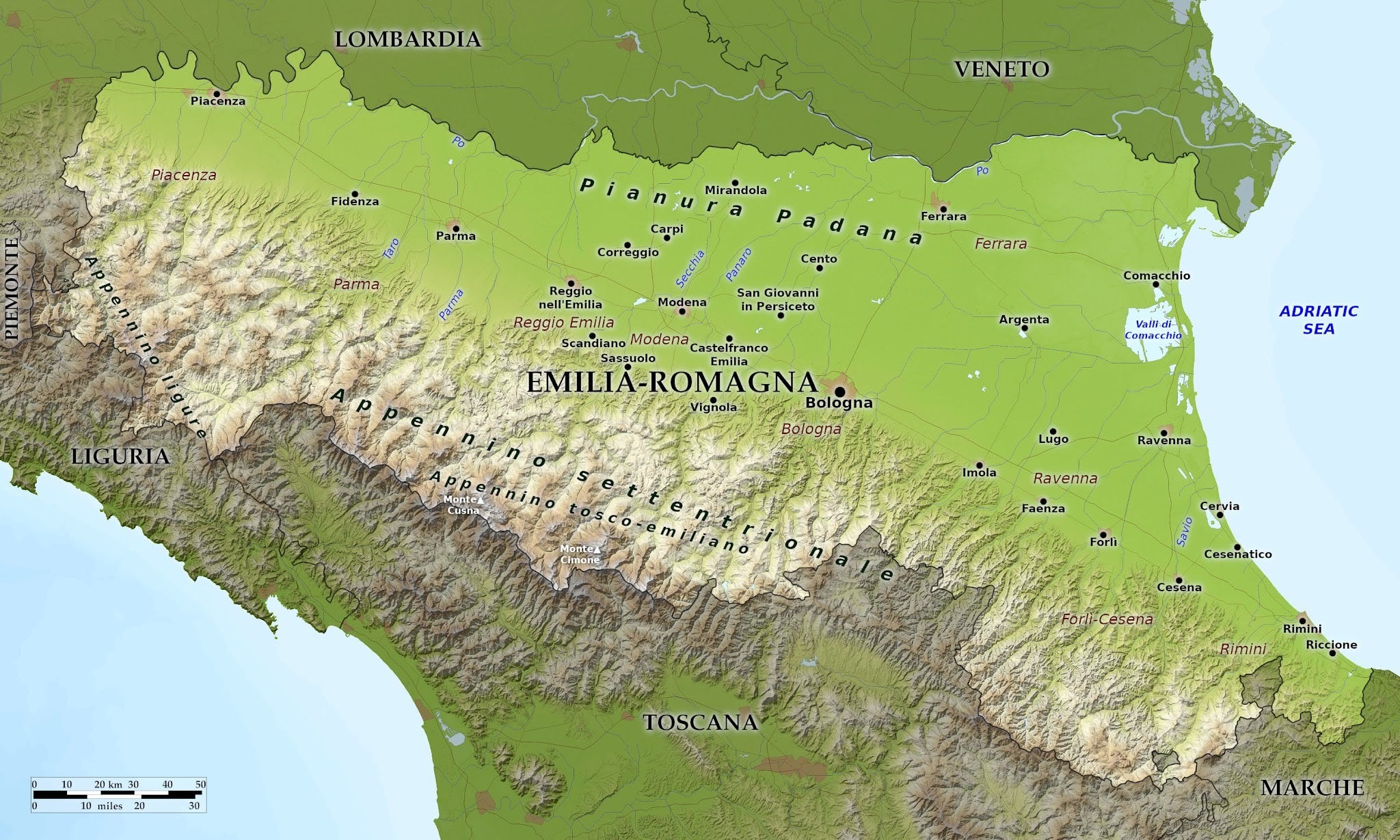
Lambrusco “earned” its pedestrian reputation because it is a wine that has a history of being mass produced as cheaply as possible. Grapes for Lambrusco are grown in the Emilia Romagna “region” of Italy at a massive scale, often with large, uncapped yields that are used for industrial production. As such, an immense amount of utterly plonktacular Lambrusco is out there, and if you were to throw a dart at the metaphorical Lambrusco dartboard, you’d have better odds of hitting a jug of drain cleaner than something that actually resembles wine.
But like many “beverages” that have earned a poor reputation in the eyes of “today’s youth” as a byproduct of the mass market, it does a disservice to the producers out there committed to crafting highly quaffable bottles that prove themselves worthy of your measly two cents (and perhaps even “your time”). And “out there” they are – if you choose your bottles wisely.
Today we’ve gone on an excruciatingly wholesome little mission to make the selection process easier for you, but before we get into our humble reviews, let’s talk a little about the style.
HOW IS IT MADE?
Tank Method/Charmat Method of fermentation is typically used as an inexpensive and relatively low labor approach that preserves the fresh and fruity character of the grapes. This means large quantities of juice undergo both primary and secondary fermentations in controlled conditions with minimal oxygen exposure in a tank (LIKE ME!). This “imbues” the wine with those precocious little bubbles we all “know and love” for a relatively low cost.
Sometimes the higher cost and more labor intensive ancestral method (single fermentation, finished in bottle) or traditional method (secondary fermentation in bottle) will be used, but it is much less common and generally reserved for smaller production bottlings.
Lambrusco is made using various “Lambrusco varieties” (e.g., Lambrusco Salamino, Lambrusco Grasparossa, Lambrusco Maestri, Lambrusco Marani, Lambrusco Montericco, Lambrusco etc), often blended with “local favorites” (e.g., Ancellotta, Malbo Gentile, Fortana, Perla dei Vivi, etc) in smaller quantities. The ratio between the primary Lambrusco varieties in the blend and the “supporting acts” are typically 85% to 15%, but it varies by region and producorial gall. They are selected and blended to balance a variety of characteristics to match local styles and winemaker preference, such as depth of color, tannin intensity, fruitiness, and likelihood of yielding “a good time.”
There are about a dozen DOCs that produce Lambrusco dominant wines (8 of which produce wines that can be labeled as Lambrusco) as well as a broader Lambrusco Dell’Emilia IGP from which the bulk of Lambrusco is “gleaned.”
If you want to learn more about the specifics, here are a couple of neat little links we’ve referenced that go into greater depth:
https://lambrusco.net/en/denominations/
https://italianwinecentral.com/variety/lambrusco/
10 years ago, Margaret Rand wrote an article for Decanter “discussing” where the category was using a timeless analogy involving magic frogs, and predicting Lambrusco’s potential for a brighter future. We are now in said “future” and she was onto something, as decent quality Lambrusco has only gotten more accessible, more appreciated, and more expensive.
Well isn’t that nice. Let’s dive into the juice…
… AND NOW FOR THE REVIEWS (IN ORDER OF PRICE):
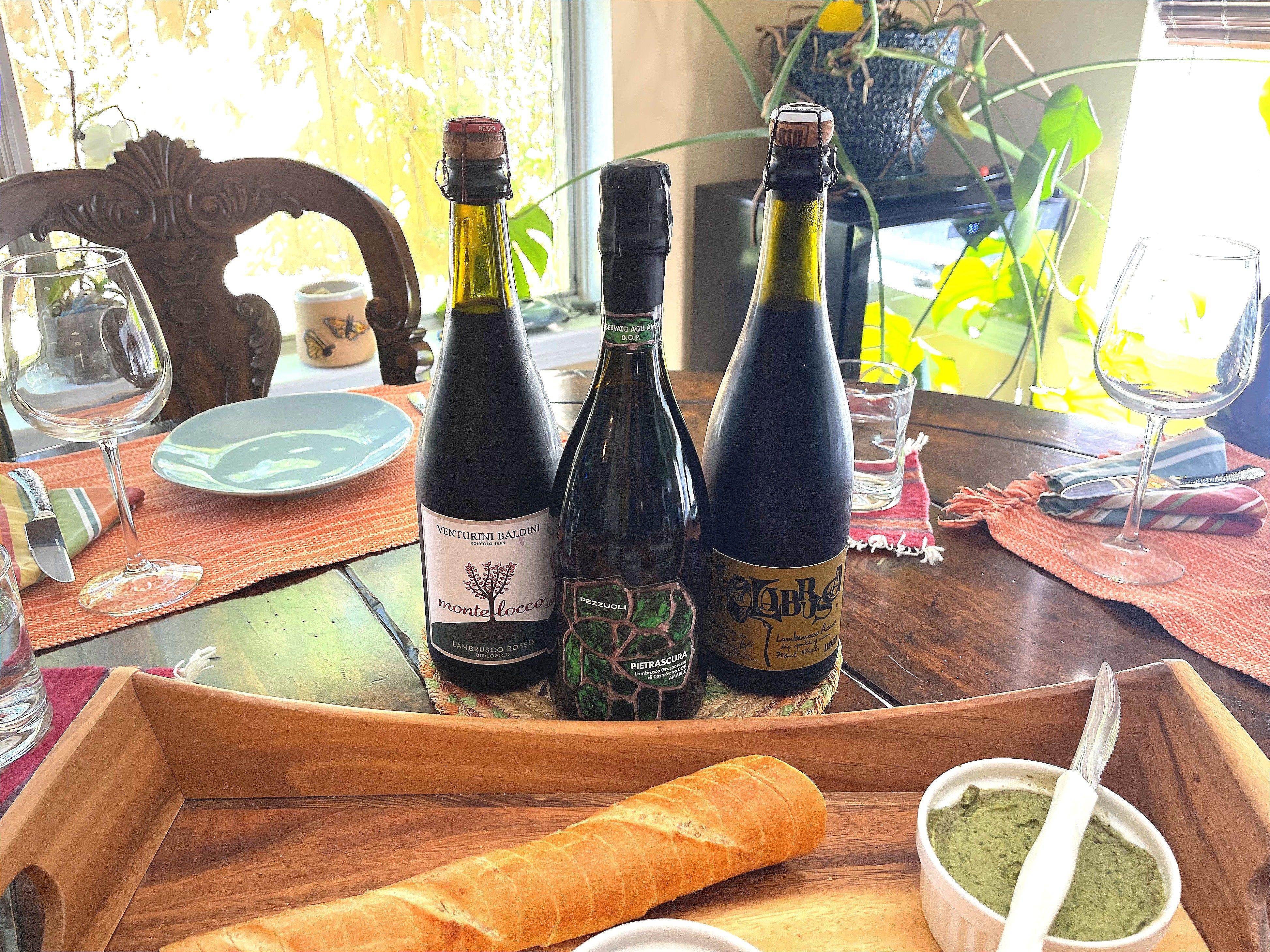
Venturini Baldini Montelocco Emilia Lambrusco (Organic) / $16
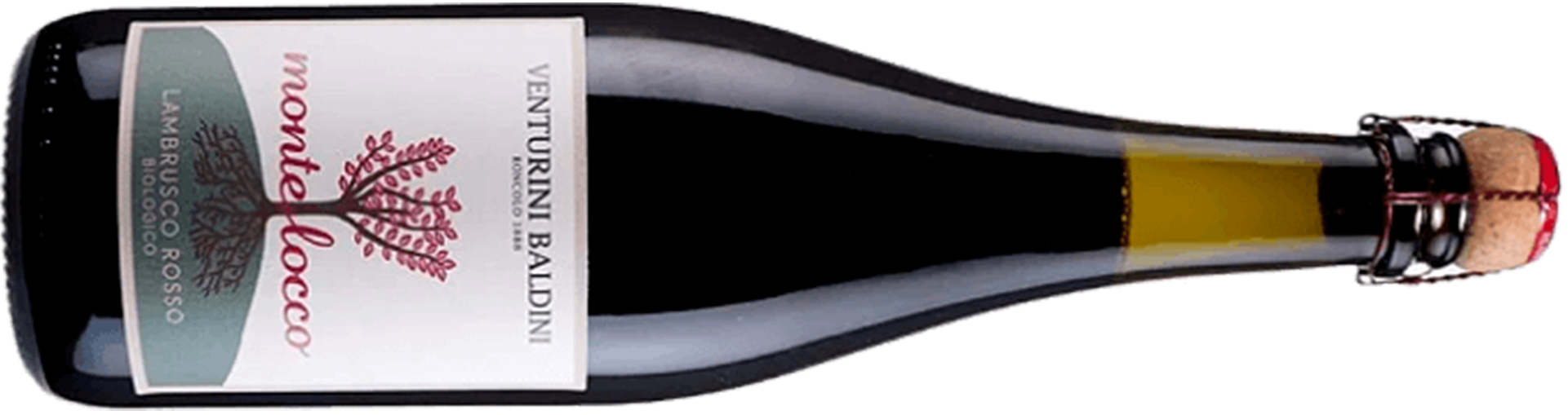
Profile: Herbal, yogurty, anise, bay leaf, plum, potpourri, orange peel, christmas spice, dried cranberry
Palate: Dry, high acid, medium tannin, light body, long finish
This one was a “lot of fun” — the favorite of the bunch hands down.
A little bitter on the finish and quite dry, so not a top pick for you if you prefer a sweeter style, but this was also notably more complex than the other examples, bringing herbaceous and spicy notes alongside potpourri, orange peel and dried cranberry.
Enjoyable to drink on its own, but it presents some interesting opportunities for pairing with more flavorful and spicy dishes.
This would make a great holiday wine. Definitely exemplifies how at a relatively low price you can find a lot of range in this category — and that a cheaper bottle often doesn’t mean a lower quality wine.
(I)
Pezzuoli, Lambrusco Grasparossa di Castelvetro DOP / $18
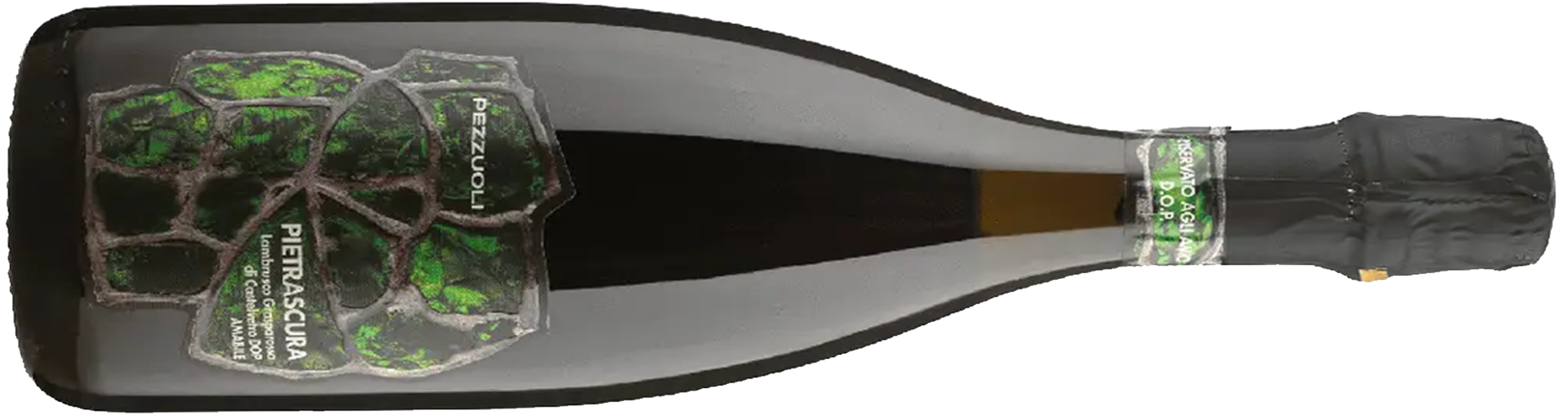
Profile: Blackberry, grape, violet, yogurt
Palate: Sweet, low tannin, medium body, medium finish
That was definitely my least favorite of the bunch for drinking on its own – though the “sweetness” helped bring out “the bubbles.”
However, not really any notable tannin structure and I found it to be too sweet and very simple. As it was, it just tasted a bit like a syrupy and sweet berry soda. That said, it went decently with dessert (being as how it is one) and “low expectations.” Would I revisit if given the choice? Probably not, but some of the other folks I tasted with enjoyed it so if you are drawn to a sweeter and simpler fruity style, this could be your jam.
(I)
Labrusca Lambrusco Rosso, Lambrusco Dell’Emilia IGP / $28
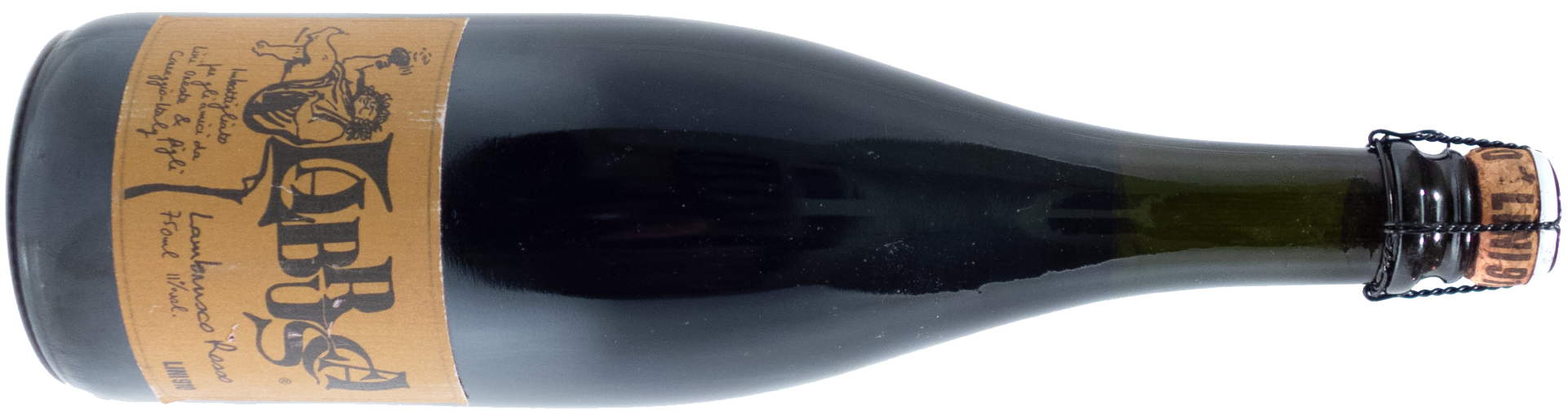
Profile: Strawberry, raspberry, tart blackberry, rose, kirsch, sourdough, chalk
Palate: Dry, high acid, medium- tannin, light body, short finish
Pleasant, clean, straightforward, easy drinking!
Tastes like a decent quality Cotes du Rhone made with semi-carbonic maceration (red fruit, banana, kirsch, bubblegum) plus frothy little “bubbles” to add “intrigue.” Was I intrigued? Not particularly. But if you’re “feeling thirsty,” this is a reasonable option for “staying hydrated.”
This would make a really good Sangria base, or just a simple, easy to drink little “adult soda” without the sugar and with a dash of the “good stuff” (11% abv).
(TP)

While Lambrusco may still be a category where plonk sometimes rears its ugly head, it is also a unique style of wine that fits a niche otherwise unoccupied, and there are unquestionably worthwhile examples out there to satisfy a wide range of tastes.
“We” tend to enjoy it most when it is dry with tangible tannin structure and a little more going on than just “fruit” and “bubbles,” but even the simpler dry styles are a great way to wet your proverbial whistle before a goodly meal.
If you haven’t given it a shot, it’s becoming increasingly common to find it at Italian restaurants and wine bars (often well selected/curated bottles), and even if you don’t like it the first time, don’t give up hope — there’s more than swill in them hills.
Until next time, HAPPY DRINKING PEOPLE.
Cheers!
Isaac & Zach
Great read! I didn’t know there were a dozen DOCs that produced Lambrusco. Intrigued by that first dry bottle- it does sound perfect for Christmas!